
Composable commerce with VELOX
Many Swiss and European companies use large, all-in-one platforms to run their online shops. These systems are cumbersome, costly to maintain and slow to adapt. Every time a company needs to add a new payment method, connect to a logistics partner, or expand into a new market, the project becomes long and costly.
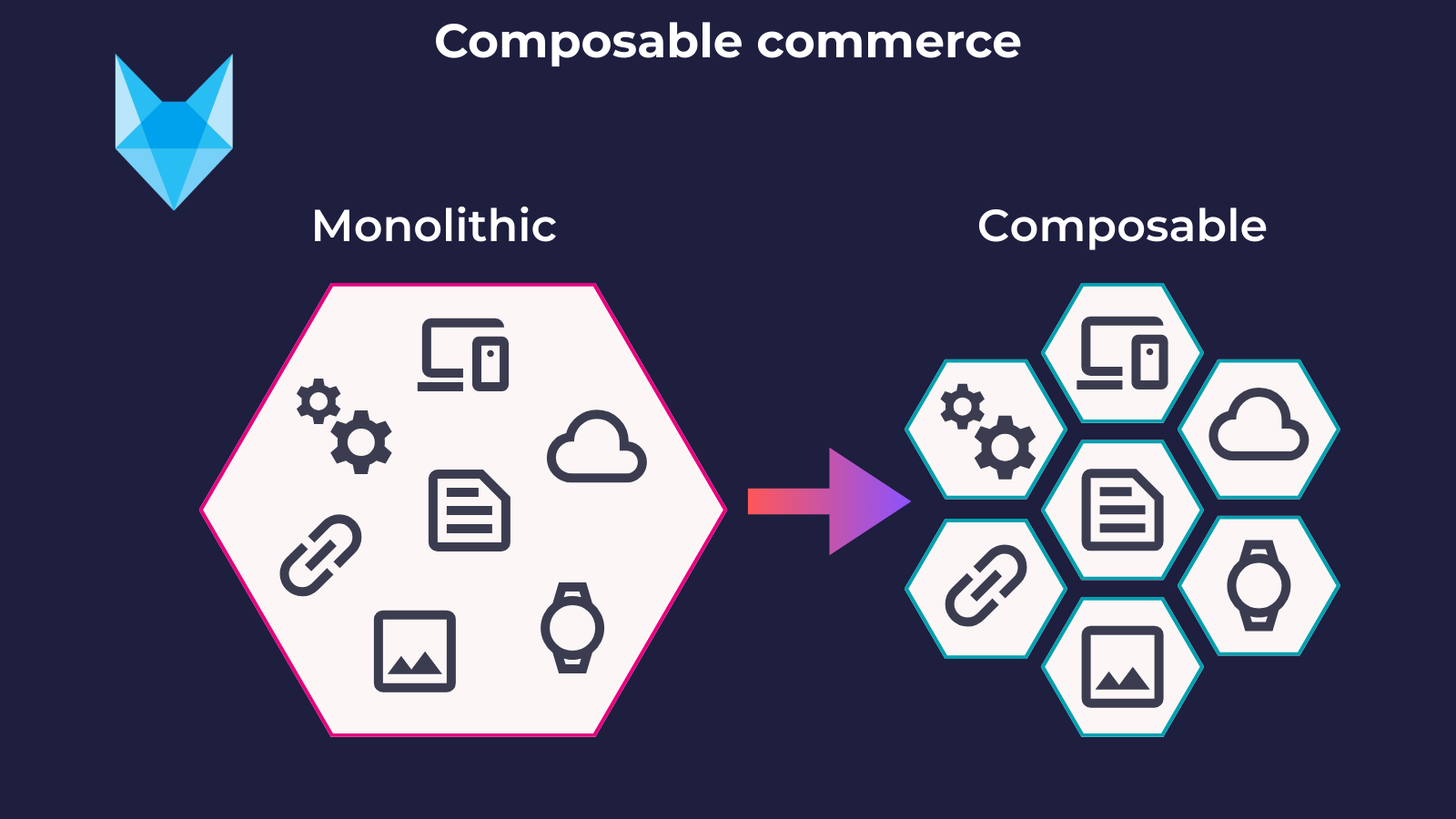
VELOX Ecommerce was built to solve these problems. It uses a composable commerce approach: select the applications you need and connect them via APIs. Instead of being locked into one vendor, you can add, remove, or replace services as needed. This is called “composable commerce” (as opposed to “monolithic” commerce architecture).
Composable commerce lets you pick and connect only the tools you actually need. You can build, change or upgrade your online shop exactly how you want.
Advantages include:
- Faster projects: A new storefront or feature can be live in weeks, not 18–24 months.
- Lower costs: No cost for unused features. You only pay for services that generate value. Total ownership costs can be 30–40% lower compared to legacy systems.
- Less risk: If one tool underperforms, it can be replaced without affecting the entire system.
Some Real-Life Use Cases
Here are some examples of how composable commerce can speed up development:
- Payments: A Swiss SME wants to offer “TWINT” as a payment method. Their current shop system doesn’t support it, and the vendor has no plans to add it in the near future.
- Logistics: A German retailer wants to use both DHL and Swiss Post for shipping, but their monolithic platform only integrates with one provider.
- Content and SEO: A mid-sized B2B manufacturer wants to publish product information in several languages. Their current platform can’t manage SEO or multilingual content effectively.
In all of these cases, companies either have to pay for custom development, wait for the vendor to release an update, or switch to a different platform. This results in months of delay and high costs.
How VELOX Handles These Cases
With VELOX, companies can add or change services directly in line with the composable commerce model:
- Payments: Connect TWINT, PayPal, or other regional payment providers without waiting for vendor approval.
- Logistics: Integrate multiple shipping services, so a company can use Swiss Post for local orders and DHL for exports at the same time.
- Content and SEO: Use Storyblok or another headless CMS to manage multilingual content and improve search visibility across markets.
Instead of a system overhaul, these changes are incremental. The business can keep running while adapting piece by piece.
Why This Matters for Swiss and European Businesses
Regulation, customer expectations, and cross-border trade make the European market complicated. Companies need to deal with GDPR, multilingual requirements, and fragmented logistics. Monolithic systems often can’t keep up.
VELOX is built for these conditions:
- Data stays in Europe and meets GDPR standards.
- Payment options like TWINT or SEPA are supported.
- Logistics systems across different countries can be connected directly.
This makes it possible for companies to expand without a full rebuild every few years.
Conclusion
Composable commerce avoids the high costs and risks of large inflexible platforms. VELOX provides a practical path:
- Companies start with the basics they need.
- As they grow, they add services step by step.
- If a service requires improvement or change, it can be replaced without disrupting the system.
The advantage is clear: VELOX' Composable Commerce architecture reduces cost, shortens project timelines, and removes dependency on single vendors. It gives businesses a sustainable way to run digital commerce in Switzerland and across Europe. Contact us now for more information or a demo.